Dr. Joyce R. Blueford, Geologist
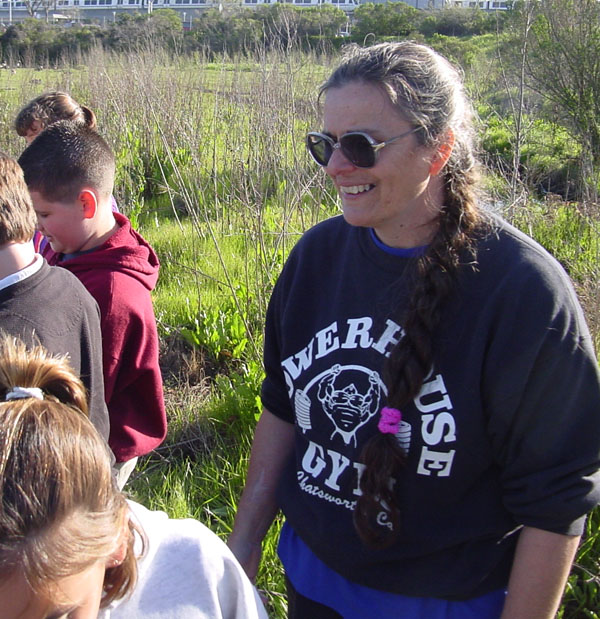 Thinking
about being a Scientist, Engineer or Mathematician? Dr. Blueford
will discuss the skills needed to "think" like one. The workshop will
discuss why math is important, and how you can help the world through
science. Students will be challenged to think to solve problems
with a hands-on project.
Thinking
about being a Scientist, Engineer or Mathematician? Dr. Blueford
will discuss the skills needed to "think" like one. The workshop will
discuss why math is important, and how you can help the world through
science. Students will be challenged to think to solve problems
with a hands-on project.
As a scientist, Dr. Blueford worked on many projects that looked at understanding how sedimentary basins evolved through time. She worked in California, Alaska, and Russia. Her expertise is on radiolarian evolution during the Cenozoic. Radiolarians are protozoa that produce a siliceous skeleton of unimaginable beauty.
Dr. Blueford will also share her experience of how to increase science not only in this country but abroad. She will also provide students with ways in which they can help. She oversees the high school service learning projects and internship at the Math Science Nucleus.